

Asia-Pacific Cooling as a Service market Set for Steady Growth to US$ 5,640.36 million in 2032 at a CAGR of 10.6%.
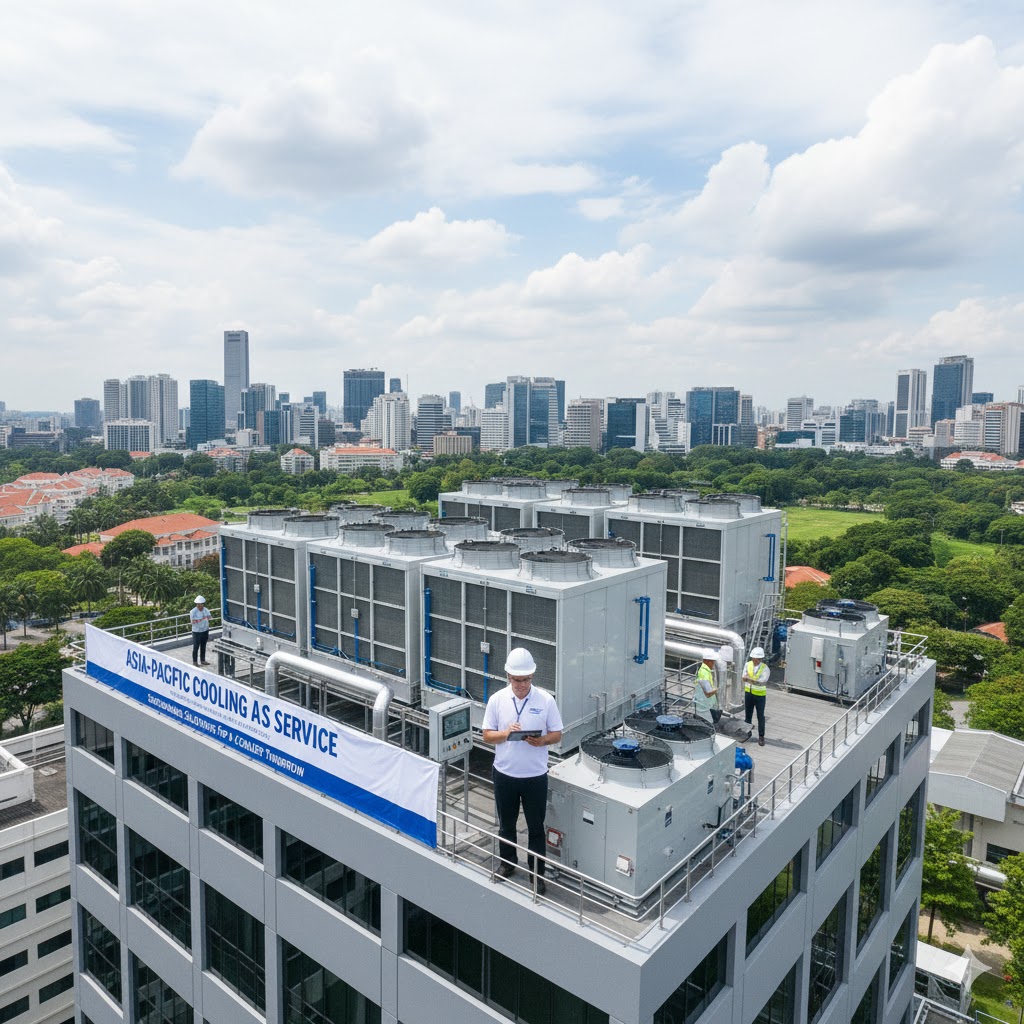
Asia-Pacific Cooling as a Service market is growing rapidly, driven by rising data centers, urbanization, energy efficiency goals, demand for cooling solutions.
Cooling as a Service is redefining HVAC adoption in Asia-Pacific by shifting from asset ownership to performance-based models, enabling cost savings.
sustainability, scalable cooling for industries.”
AUSTIN, TX, UNITED STATES, December 18, 2025 /EINPresswire.com/ -- Asia-Pacific Cooling as a Service market was approximately US$ 2,532.48 million in 2024 and is expected to reach US$ 5,640.36 million in 2032 growing at a CAGR of about 10.6% during the forecast period (2025-2032). — DataM Intelligence
Market growth is driven by the rising demand for energy-efficient cooling solutions, increasing adoption of subscription-based and opex-driven cooling models, and growing awareness of sustainability and carbon emission reduction. Additionally, advancements in smart cooling technologies, expanding deployment across commercial buildings, data centers, and industrial facilities, and improving regulatory support for energy efficiency initiatives are further supporting market expansion.
Get a Free Sample PDF Of This Report (Get Higher Priority for Corporate Email ID):-https://www.datamintelligence.com/download-sample/asia-pacific-cooling-as-a-service-market
Asia Pacific / Japan: Key Industry Developments:-
◾ October 2025: Mitsubishi Electric rolled out subscription-based CaaS for smart buildings in Japan, featuring renewable energy integration and IoT controls for urban cooling efficiency.
◾ September 2025: Panasonic initiated pilot CaaS models in Japan with renewable chillers and predictive analytics, targeting commercial sectors to cut peak energy use.
◾ August 2025: Tata Power Trading Company Ltd launched CaaS business across Asia-Pacific with a 200,000+ ton refrigeration pipeline and 25 HVAC projects valued at US$0.64 million.
United States: Key Industry Developments:-
◾ November 2025: Vertiv expanded its Cooling as a Service (CaaS) offerings with AI-optimized liquid cooling subscriptions for data centers, reducing energy costs by 20% through predictive maintenance and modular deployment.
◾ October 2025: Schneider Electric launched Motivair CaaS solutions tailored for U.S. high-density computing, integrating software for thermal management and supporting hybrid cloud infrastructures.
◾ September 2025: No specific U.S.-focused CaaS product launches identified in 2025; market growth driven by broader data center expansions amid AI demand.
Key Merges and Acquisitions(2025):-
In November 2025, Carrier Global piloted cross-border Cooling-as-a-Service (CaaS) contracts for multinational clients operating in APAC, enhancing its service scalability and market penetration through innovative leasing models tailored for regional data centers and commercial facilities.
In November 2025, Daikin launched expanded Cooling-as-a-Service contracts across APAC with Japan-based pilots offering predictive maintenance and performance SLAs for retail and manufacturing clients, reducing total cost of ownership and reinforcing its regional leadership.
In October 2025, Johnson Controls invested US$30 million to develop modular chiller fleets and remote-monitoring platforms enabling CaaS deployments across APAC client portfolios, strengthening integrated-service offerings amid rising demand for scalable cooling.
In October 2025, Mitsubishi Electric invested ¥4.0 billion to expand smart-chiller leasing fleets and enhance remote diagnostics for CaaS customers in Southeast Asia, improving responsiveness and uptime guarantees to bolster its service portfolio
Market Segmentation Analysis:-
-By Service
Installation leads with 35% share, driven by rapid deployment of cooling solutions across residential, commercial, and industrial segments. Maintenance accounts for 28%, ensuring system efficiency and longevity. Monitoring and support services contribute 37%, enabling real-time performance management and predictive maintenance.
-By Application
Comfort cooling dominates with 30% share, catering to residential and commercial spaces. District/community cooling holds 22%, driven by urban development projects in China, India, and Southeast Asia. Mission-critical, peak shaving/temporary, and process cooling contribute 48%, supporting industrial, data center, and manufacturing requirements.
-By End-User
Commercial leads with 38% share, driven by offices, malls, and hospitality sectors adopting outsourced cooling solutions. Industrial holds 32%, supported by process cooling and mission-critical applications. Residential contributes 30%, reflecting growing demand for energy-efficient cooling-as-a-service solutions in urban housing.
Purchase this report before year-end and unlock an exclusive 30% discount:https://www.datamintelligence.com/buy-now-page?report=asia-pacific-cooling-as-a-service-market (Purchase 2 or more Reports and get 50% Discount)
Growth Drivers:-
1. Rising Demand for Energy Efficiency & Sustainability
Customers (commercial, industrial, and data centers) increasingly seek solutions that reduce energy consumption and carbon emissions. CaaS providers optimize system performance and energy use through advanced technology, helping end-users meet sustainability goals and regulatory requirements.
Governments in countries like Singapore, Japan, and Australia are enforcing stricter carbon and energy efficiency standards, making performance-based service models more attractive.
2. Lower Upfront Capital Costs (Low CAPEX Model)
The CaaS model shifts cooling infrastructure from a capital expenditure (CapEx) to an operational expenditure (OpEx) model. Businesses can avoid large upfront investments in equipment and instead pay for delivered cooling services, reducing financial risk and improving cash flow.
3. Rapid Urbanization & Industrialization
Fast-growing urban populations and expanding commercial real estateespecially in China, India, and Southeast Asiaare increasing demand for efficient, scalable cooling solutions.
Industrial sectors (manufacturing, processing) require high-performance cooling that CaaS can deliver without heavy capital commitments.
4. Growth of Data Centers & Digital Infrastructure
The explosion of cloud computing, digital services, and IoT drives data center expansion. These facilities demand effective cooling systems to maintain performance and uptime, which is pushing adoption of outsourced, service-based cooling.
5. Rising Energy Prices & Volatility
Increasing and volatile electricity prices make energy-efficient cooling systems more financially compelling. CaaS providers are motivated to improve system efficiency (to reduce both their and their customers’ costs), aligning financial and sustainability incentives.
6. Technological Advancements (IoT, AI & Remote Monitoring)
Deployment of IoT sensors, cloud analytics, and AI-based predictive maintenance allows CaaS providers to monitor and optimize cooling systems in real time, reducing downtime and improving efficiency.
7. Supportive Government Policies & Green Initiatives
Regional policy frameworks (including energy efficiency goals and building codes) encourage the adoption of CaaS as a turnkey compliance solution, reducing the technical and administrative burden for customers.
Regional Insights:-
China holds the largest revenue share within the Asia-Pacific CaaS market, accounting for an estimated 37.6% in 2024. This dominance is driven by massive digital infrastructure development, a large number of data centers, and strong government support for cloud computing and IoT technologies.
Japan follows with a significant share of approximately 12% of the Asia-Pacific market. Its established market is led by the adoption of mission-critical cooling and liquid cooling in industrial applications and data centers.
Australia contributes an estimated 8% market share, driven by demand for energy-efficient air and evaporative cooling solutions in commercial and residential sectors.
India is a key player and the fastest-growing market in the region, driven by surging data consumption, government initiatives for data center development (like the India Cooling Action Plan), and increasing adoption of cloud services. Its specific percentage share within the Asia-Pacific market is not explicitly defined in recent reports, but its rapid growth (high CAGR) is a primary regional trend.
Speak to Our Analyst and Get Customization in the report as per your requirements:https://www.datamintelligence.com/customize/asia-pacific-cooling-as-a-service-market
Key Players:-
Key companies include Carrier, Johnson Controls, ENGIE Group, CLP Group (CLPe), and Singapore-based Kaer. New entrants such as Tata Power and AESL are expanding via district cooling and renewable infrastructure projects.
Key Highlights (Top 5 Key Players) for Asia-Pacific Cooling as a Service market :
Carrier Global Corporation dominates with HVAC expertise, offering CaaS models that bundle design, installation, and maintenance for energy-efficient cooling without capital investment. It focuses on performance guarantees and advanced controls for data centers and buildings across APAC.
Johnson Controls invests heavily in modular chillers and remote monitoring for scalable CaaS deployments. In 2025, a US$30 million APAC expansion enhanced leasing for commercial clients, emphasizing AI-driven efficiency and uptime SLAs.
ENGIE Group leverages energy solutions for sustainable CaaS, targeting district cooling in urban APAC markets. It provides pay-per-use models with low-carbon tech, supporting smart cities and industrial heat management.
CLPe, from Hong Kong's CLP Group, uses its utility network for regional CaaS advantage, delivering reliable cooling via district systems. It excels in commercial and data center applications with performance-based contracts.
Singapore-based Kaer, a pure-play CaaS specialist, offers zero-capex, pay-as-you-use cooling for offices, malls, and factories. A 2025 US$350 million investment scales operations across Southeast Asia, prioritizing sustainability.
Unlock 360° Market Intelligence with DataM Subscription Services: https://www.datamintelligence.com/reports-subscription?pratik
Power your decisions with real-time competitor tracking, strategic forecasts, and global investment insights all in one place.
Conclusion:-
The Asia-Pacific Cooling as a Service market is rapidly expanding, driven by rising data center demand, urbanization, and energy-efficiency regulations. Growing adoption of subscription-based cooling models, smart infrastructure, and sustainability goals positions the region as a high-growth hub for long-term service-led cooling solutions.
Related Reports:-
1. Global Power Transformers Market
2. Hydrogen Gas Turbine Market
Sai Kiran
DataM Intelligence 4Market Research
+1 877-441-4866
email us here
Visit us on social media:
LinkedIn
X
Legal Disclaimer:
EIN Presswire provides this news content "as is" without warranty of any kind. We do not accept any responsibility or liability for the accuracy, content, images, videos, licenses, completeness, legality, or reliability of the information contained in this article. If you have any complaints or copyright issues related to this article, kindly contact the author above.
